


Creatine for Women: Why the Story Needs Updating

WHY CREATINE FOR WOMEN IS MORE THAN A MUSCLE SUPPLEMENT
I started taking creatine regularly over a year ago. Not because I wanted bigger muscles. Because I wanted my brain to work better.
Five grams in my coffee every morning. Recently, after more research, I increased this to 10 grams and switched to a higher quality German supplement called Creatine Pure. The GI issues I had been dealing with disappeared completely. My training energy improved. I could push out an extra few reps, add a little more weight. But the biggest shift was mental clarity in the evenings when I wanted to study or read. My memory got sharper. My energy more focused and steady.
When I stopped taking it on holiday, I noticed the difference within a few days.
This is not the creatine story you have been told. The one you know is about bodybuilders, loading phases, and weight gain. That story is not wrong—it is just incomplete. And for women, it is the wrong starting point entirely.
THE BODYBUILDING MYTH THAT WONT DYE
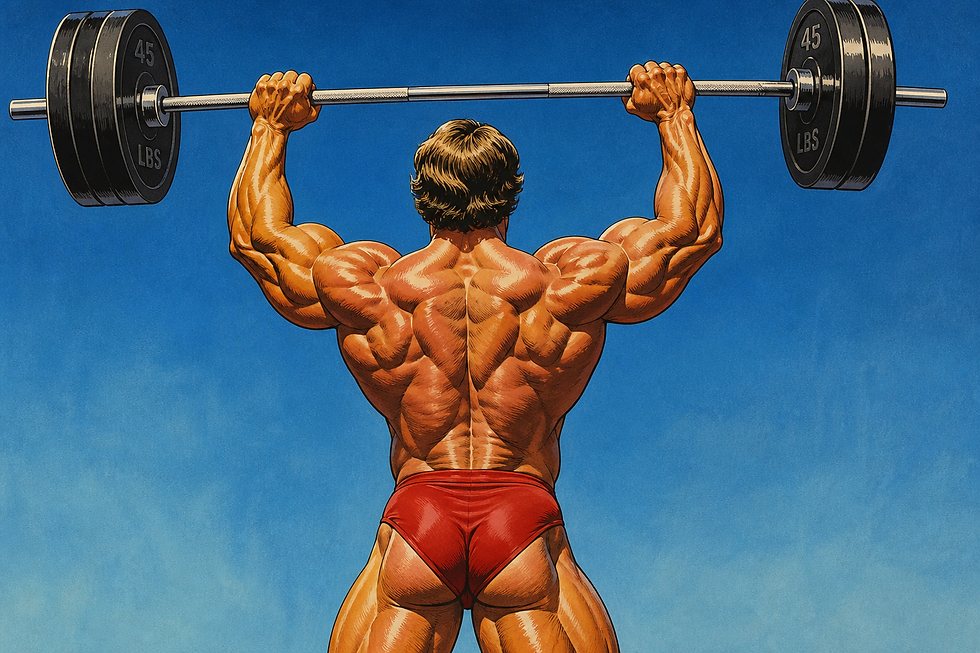
Creatine got owned by the bodybuilding world early because that is where the first visible, rapid results showed up. Strength gains. Fuller muscles. Quick scale changes. It was easy to market, easy to see, and it got reinforced through gym culture, supplement branding, and messaging that focused almost entirely on performance and aesthetics.
What keeps that association alive is a mix of outdated narratives and visibility bias. The weight gain from water still gets misinterpreted as fat gain. Most marketing still targets physique goals. And the newer research on brain health, mood, and longevity has not been translated clearly into everyday practice.
So even though the science has expanded, the story people remember has not caught up yet.
The most common objection I hear from women is always the same: "I don't want to take creatine because it makes you gain weight and look bulky."
I used to try to dismantle that belief with science. Now I just unpack it gently.
WHAT ACTUALLY HAPPENS WHEN YOU TAKE CREATINE
When people notice weight changes with creatine, it is not fat. It is a small shift in water into the muscle cell—intracellular hydration—which actually supports muscle function and performance rather than causing fat accumulation.
At higher doses or during loading phases (around 20 grams per day), that shift can show up more noticeably on the scale. But at health-focused doses of 3 to 5 grams daily, the increase in water retention is much smaller, gradual, and often not noticeable at all. It does not translate into meaningful weight gain in practice.
The bodybuilding approach uses a loading phase and sometimes carb timing to rapidly saturate muscle stores. This can lead to quick performance gains—but also noticeable water weight changes and a higher chance of GI discomfort.
The health-focused approach uses a consistent 3 to 5 grams daily with no loading or timing. This leads to more subtle, sustainable benefits like improved energy, recovery, and mental clarity, without the unwanted side effects or scale fluctuations.
Creatine is not an anabolic steroid. It does not increase testosterone levels. This fact directly addresses the fear many women have about getting bulky and reinforces that creatine works through energy metabolism, not hormone manipulation.
WHY WOMEN START FROM A DIFFERENT BASE LINE

Women exhibit 70 to 80 percent lower endogenous creatine stores compared to males. This is not a flaw. It is why women may stand to benefit even more from supplementation than men, as they have greater capacity to increase creatine levels from a lower baseline.
That finding comes from research looking at baseline intramuscular creatine stores, which tend to be lower in women compared to men—often attributed to differences in muscle mass, dietary intake, and hormonal influences.
What really clicked for me is what that means in practice - If women are starting with lower baseline stores, they are further from saturation. So supplementation is not about adding something extra. It is often about bringing levels up to a more optimal range.
That helps explain why many women—especially those under higher stress, training, or in midlife—can notice meaningful benefits even at standard health-focused doses, without needing aggressive loading protocols.
It is not just that women have less. It is what lower baseline stores mean for how the system functions under stress and hormonal change.
Biologically, creatine supports the phosphocreatine system, which buffers ATP (cellular energy) in high-demand tissues like muscle and brain. When baseline stores are lower, there is less reserve capacity to rapidly regenerate energy. So any added demand—training, poor sleep, stress, or hormonal shifts—is felt more quickly.
In women, this becomes especially relevant in midlife, where changes in oestrogen affect muscle protein synthesis and recovery, insulin sensitivity and fuel use, and brain energy metabolism and cognitive function.
Lower creatine availability means the system is closer to its threshold. It has less buffer. Supplementation, then, is not about needing more. It is about restoring energy resilience across both brain and body.
That is why even standard doses of 3 to 5 grams can have meaningful effects. They are helping stabilise a system that is already operating with less margin.
THE BRAIN AND GUT CONNECTION YOU WERE NOT TOLD ABOUT
I do not try to undo the muscle story. I expand it.
Yes, creatine supports muscle. But what it is really doing is supporting cellular energy everywhere.
Brain energy: The brain is one of the most energy-demanding organs, and creatine helps buffer that energy. Instead of thinking muscle supplement, you start to see it as support for mental clarity, focus, and resilience, especially under stress or poor sleep.
Studies have found that women have lower levels of creatine in the brain, particularly in the frontal lobe, which controls mood, cognition, memory, and emotion. Pre-clinical and clinical evidence indicates positive effects from creatine supplementation on mood and cognition, possibly by restoring brain energy levels and homeostasis. Creatine supplementation may be even more effective for females by supporting a pro-energetic environment in the brain.
Gut health: Research suggests creatine helps maintain gut lining integrity by supporting cellular energy, particularly during times of stress or repair, making it easier for the gut to maintain its protective barrier.
Research has also found that people with inflammatory bowel conditions may have lower ability to transport and use creatine in the gut. When creatine is low, gut cells become more stressed and less efficient, which can weaken the gut lining and make it more “leaky.”
This mechanism explains why gut symptoms can persist even with normal test results—a pattern I see daily in clinical practice.
This is not about building muscle. It is about helping you feel more switched on, more steady, and better resourced day-to-day.
THE HORMONAL LIFE STAGES WHERE CREATINE MATTERS MOST

Due to hormone-related changes to creatine kinetics and phosphocreatine resynthesis, supplementation may be particularly important during menses, pregnancy, postpartum, during and post-menopause.
Emerging research suggests that creatine production is influenced by hormonal shifts, particularly changes in oestrogen and testosterone levels.
Women are more likely to experience depression than men, and this risk tends to increase during key hormonal transitions—like puberty, the luteal phase, after pregnancy, and through perimenopause.
There’s also emerging research suggesting creatine may help enhance the effectiveness of certain antidepressants in women, pointing again to its role in supporting brain energy and resilience.
The biggest shift for me was realising that midlife women's physiology is fundamentally different from the traditional, male-based bodybuilding model. Despite doing all the right things—eating less and training more—many women were not seeing results because hormonal changes, particularly in oestrogen, impact metabolism, muscle, and brain function.
The research shows that under-fuelling and overtraining often make things worse, not better. Instead, midlife health responds more positively to adequate nutrition, strength training, and recovery—alongside activities like creatine supplementation, which support brain health, cognitive function, and overall wellbeing.
WHAT I ACTUALLY SEE IN CLINICAL PRACTICE
At a dose of 3–5g daily, especially when taken with food, creatine is generally very well tolerated and I rarely see any digestive issues in practice.
What I tend to see is subtle but meaningful. Slightly better mental clarity. Less afternoon fatigue. A more stable mood or stress response.
It is not a dramatic shift. But more of an "I feel more like myself" effect—driven by improved cellular energy rather than a stimulant-type boost.
What often shifts the conversation isn’t more information—it’s making it relevant.
I’ll often bring it back to real life and say something like:
“This isn’t about building muscle—it’s about supporting your energy. The kind that carries you through your day, your training, your work, and everything else you’ve got going on.”
And honestly, I’ve seen this in my own life too. Between raising two young kids, studying in the evenings, and training, I’ve noticed how much more stable my energy feels across the day—and how much easier it is to stay clear and focused when I need to.
That’s also what I hear from clients:
more consistent energy through the afternoon
better mental clarity by the end of the day
feeling less depleted overall
That’s usually when it clicks.
Creatine stops being something that adds to the body—and starts being something that supports how you feel and function day-to-day.
HOW TO ACTUALLY USE CREATINE FOR HEALTH

For most adults, a daily dose of 3–5g of creatine is safe and effective for supporting muscle, recovery, and overall energy.
If the goal is more targeted brain support, some research suggests higher intakes (around 10g daily, and in some cases up to 20g) may be beneficial—though this can vary depending on individual tolerance.
My recommendation is to start with 3–5g daily, then gradually increase to around 10g if needed, which can be split across the day. I don’t typically suggest a loading phase—it’s not necessary if you’re consistent, and it can be harder on the gut.
Creatine can be taken with water or added to your morning tea or coffee—heat doesn’t affect its effectiveness, and it’s naturally unflavoured. Taking it with food (like breakfast) can also help minimise any digestive discomfort.
Taking creatine alongside carbohydrate and protein can slightly improve how much is taken up into the muscle.
But in practice, this usually isn’t necessary—especially for women. Creatine is already very well absorbed on its own, and adding extra calories (particularly during a loading phase) doesn’t tend to offer enough benefit to justify it.
This dismantles the bodybuilding myth. Women do not need carbs with creatine for health-focused benefits.
For most women, a simple approach works best:
Keep it simple—taking creatine consistently is what makes the difference.
If you notice an early change in weight, it is usually temporary and caused by your muscles holding more water, not by fat gain. Researchers did not find evidence of weight gain in females. Some women may notice water retention during the first couple of weeks of taking creatine, but this does not seem to lead to any long-term weight gain with standard doses.
At health-focused doses of 3 to 5 grams, the water retention concern virtually disappears.
START WITH THIS
If you are hesitant, lower the barrier. Start at 3 grams daily. Frame it as a 2 to 4 week experiment, not a long-term commitment. You can stop anytime.
What usually shifts things is not the science. It is removing the pressure. Let's just see how your body responds.
This is not about muscle size. It is about supporting energy, recovery, and brain function—especially with everything you have got going on.
If you’d like to chat more about creatine or any nutrition-related questions you might have, you’re always welcome to book a free 20-minute phone or online consult with me—we can take it from there.


Comments