


Gut Health Reset: Simple Nutrition Tips After Antibiotics
Updated: Oct 8, 2025

Gut Health Reset After Antibiotics - Simple Nutrition Tips
Struggling with digestion after antibiotics? Learn 5 simple gut health tips to restore balance, boost energy, and support your microbiome naturally.
Why Your Gut Feels Different After Antibiotics
Antibiotics save lives, but they can also disrupt your gut microbiome — the “good” bacteria that keep digestion, energy, and immunity in balance. If you’ve noticed bloating, fatigue, or irregular digestion after antibiotics, you’re not alone. The good news? With simple nutrition steps, your gut can recover.
Why Gut Health Matters
Your gut microbiome — the trillions of bacteria living in your digestive tract — plays a role in digestion, nutrient absorption, immune function, and even mood. When antibiotics reduce this diversity, it can leave you with bloating, irregular bowel movements, or low energy. Supporting gut health is about restoring balance and creating an environment where good bacteria can thrive again.
5 Simple Gut Health Steps After Antibiotics
Prioritise Probiotic Foods
Unsweetened Greek yoghurt
Kefir
Sauerkraut, kimchi, miso
Tempeh, kombucha
Tip: Look for unsweetened options — sugar can feed the wrong bacteria.
Feed Your Good Bacteria With Prebiotics
Green bananas, apples, pears
Oats and barley
Garlic, onions, leeks
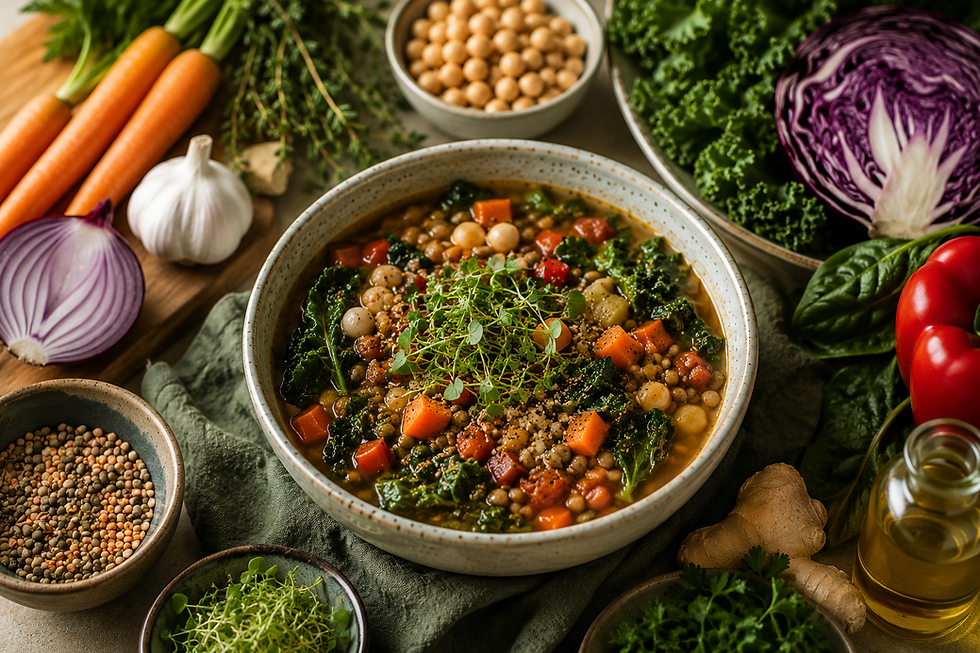
Beans, lentils, chickpeas
Tip: Add a sliced banana to oats, or stir lentils into soups.
Load Up on Colourful, High-Fibre Foods
Aim for 30 different plant foods per week. Each fruit, vegetable, legume, nut, and seed supports different gut bacteria. More colour = more diversity.
Stay Hydrated
Water helps fibre work effectively and keeps digestion moving. Aim for 6–8 glasses per day (more if you’re active). Herbal teas also count.
Limit Ultra-Processed Foods
Highly processed foods with sugar and additives can slow gut recovery. Stick to whole, minimally processed options like vegetables, whole grains, lean proteins, nuts, and seeds.
How Long Does Gut Recovery Take?
Research suggests gut health starts to improve within weeks, but full restoration may take months, depending on diet, lifestyle, and antibiotic type. Consistency is key.
Final Thoughts
Supporting your gut after antibiotics doesn’t have to be complicated. By adding probiotics and prebiotics, boosting fibre and variety, staying hydrated, and avoiding ultra-processed foods, you give your microbiome the best chance to thrive again.
✨ If gut issues are lingering, personalised nutrition support can help speed your recovery and restore balance.
Want to rebuild your gut health with a tailored plan? Book your online consult
with SuccessFuel Nutrition today and take the next step toward feeling your best.

Comments