


Gut Health Tips for the New Year: 5 Simple, Science-Backed Steps from a Registered Nutritionist
Updated: Jan 28

SIGNS YOUR GUT NEED ATTENTION:
If you’re like many of my clients, you’ve probably spent far too much time trying to “fix” your gut.
Wondering why you bloat after almost every meal. Why some days you’re constipated, other days it’s non-stop diarrhoea. Why foods that never used to bother you suddenly leave you with stomach pain, cramping, or that uncomfortable heavy, gassy feeling.
You’ve tried eating more fibre… then less fibre. You’ve taken probiotics, prebiotics, and probably a supplement or two that promised to “heal your gut.”You’ve cut out foods, added them back, cut them out again. And yet, you’re still not feeling quite right.
It can be frustrating, confusing, and honestly exhausting. So much so that you may find yourself spending your free time Googling things like “how to heal my gut” or “why am I always bloated?”
And this is where I want to gently shift the narrative.
In this post, I’ll help you understand:
The common signs your gut may be asking for support
What simple, evidence-based steps you can start with yourself
What’s often over-hyped or a quick-fix myth
And when it’s time to call in a professional for personalised guidance
No extremes. No fear-mongering. Just practical, science-backed support to help you feel better, start gently, and move forward with clarity.
WHERE TO START: THE FOUNDATIONS OF A HEALTHY GUT
When it comes to gut health, there is no single supplement, detox, or “magic food” that will fix everything overnight. The gut microbiome is complex, dynamic, and deeply influenced by what we eat consistently over time.
Large-scale research, including the ZOE PREDICT studies, shows that the diversity of our gut bacteria is one of the strongest predictors of digestive health, metabolic health, and even inflammation and mood. And the most powerful way to support that diversity isn’t restriction — it’s nourishment.
The good news? The fundamentals are surprisingly simple.
Below are five evidence-based steps that form the foundation of a gut-friendly diet. They’re not trends. They’re not extremes. They’re habits that, when practiced consistently and with flexibility, create an environment where your gut can begin to function, heal, and thrive.
Let’s break down five simple, science-backed gut health tips you can start applying this week.

Gut Health Tips: 5 Simple, Science-Backed Ways to Support Your Microbiome
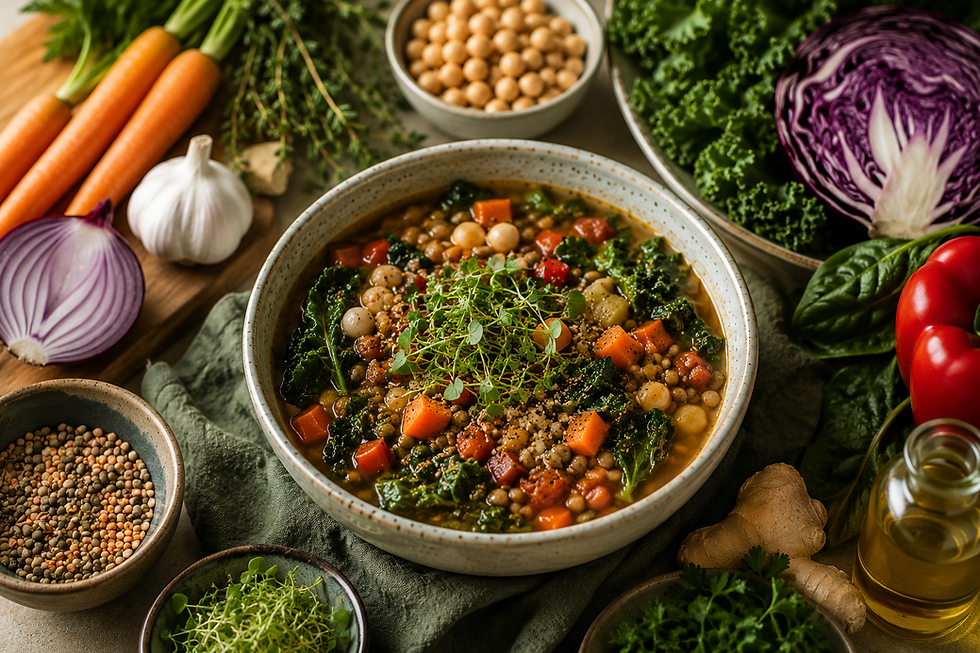
EAT 30 DIFFERENT PLANTS A WEEK
Think of your gut like a garden: The more types of plants you grow, the healthier and more balanced the ecosystem.
When we talk about “30 plants,” this includes: Vegetables, fruits, whole grains, legumes, nuts, seeds, herbs, and spices. Yes — even a sprinkle of cinnamon, a handful of mixed seeds, or fresh herbs on your dinner all count.
This isn’t about tracking calories or being rigid. It’s about gently expanding your food variety over the week. Maybe you add berries to breakfast, lentils to a soup, a new vegetable at dinner, or swap white rice for quinoa one night.
Small, consistent additions can make a big difference:
• Add different herbs and spices
• Try a new fruit or vegetable every week
• Explore canned and frozen options
• Make a mix of seeds and nuts to add to meals
• Eat what's in season
And remember: you don’t need to hit 30 perfectly every week. This is a direction, not a demand. The goal is to nourish your microbes, not stress your nervous system.
EAT THE RAINBOW
Colour isn’t just about making your plate look pretty — it’s a sign of powerful plant compounds called polyphenols and antioxidants. These compounds help reduce inflammation in the body and, just as importantly, act as fuel for different strains of beneficial gut bacteria.
Each colour group provides a unique mix of these compounds, which means variety once again becomes key.
Aim to regularly include:
Reds – tomatoes, strawberries, raspberries, red capsicum (rich in lycopene and anthocyanins that support heart and gut health)
Oranges & Yellows – carrots, pumpkin, kumara, citrus (high in carotenoids that support the gut lining and immune system)
Greens – spinach, broccoli, kale, herbs, courgette (packed with folate, magnesium, and fibres that feed beneficial bacteria)
Blues & Purples – blueberries, blackberries, beetroot, red cabbage, eggplant (particularly high in polyphenols linked with microbial diversity and reduced inflammation)
You don’t need every colour at every meal. Instead, think across the day or week. A handful of berries at breakfast, leafy greens at lunch, roasted pumpkin at dinner, and some red cabbage in a salad all add up.
A colourful plate is often a sign of:
• Greater nutrient density
• More diverse gut bacteria
• Better antioxidant intake
• A more resilient digestive system
And once again, this isn’t about perfection. It’s about gently broadening what you already eat, one colour at a time, and letting your gut benefit from that beautiful variety.

INCREASE YOUR FIBRE (SLOWLY AND GENTLY)
Think of your gut like a muscle that needs to be trained.
You wouldn’t walk into the gym and immediately start bench-pressing the heaviest weight in the room — your body wouldn’t be ready, and you’d likely end up sore or injured. Instead, you’d build up gradually, allowing your muscles to adapt, strengthen, and become more efficient over time.
Your gut works in a very similar way.
Fibre is the primary fuel for your beneficial gut bacteria, but if your intake has been low for a while, suddenly doubling it can lead to bloating, cramping, and discomfort. This doesn’t mean fibre is “bad” for you — it simply means your digestive system needs time to adapt.
By increasing fibre slowly and consistently, you allow your gut microbes to grow, diversify, and become better at breaking fibre down and producing beneficial compounds like short-chain fatty acids that support gut lining health, inflammation control, and regular bowel movements.
Great fibre-rich foods include:
• Oats
• Beans
• Lentils
• Chickpeas
• Vegetables
• Fruit
• Chia seeds
• Flaxseed
• Whole grains.
Start small. Add one new high-fibre food at a time. Increase portions gradually. Stay well hydrated. Over time, your “gut muscle” becomes stronger, more resilient, and better able to tolerate and utilise fibre — which is exactly what we want for long-term digestive comfort and health.
ADD FERMENTED FOODS
Fermented foods provide live beneficial bacteria (probiotics) and compounds that help support a diverse and balanced gut microbiome. Through the fermentation process, natural sugars and fibres are broken down, making these foods easier to digest while also producing organic acids and bioactive compounds that support gut lining health and immune function.
Think of fermented foods as seeding the garden — while fibre feeds your microbes, fermented foods help introduce and support helpful strains.

Some gentle options to include regularly are:
Yoghurt with live cultures
Kefir
Sauerkraut
Kimchi
Miso
Tempeh
Kombucha
You don’t need large amounts for benefit. In fact, when you’re new to fermented foods, starting small is ideal. Even one to two tablespoons of sauerkraut, a small glass of kefir, or a serving of yoghurt a day can help your gut gradually adapt.
If you’re sensitive, go slowly and observe how your body responds. As with fibre, tolerance often improves over time as your gut microbiome becomes more diverse and resilient.
Consistency matters more than quantity — small, regular exposures are what help support long-term gut health.
LIMIT ULTR-PROCESSED FOODS (WITHOUT AIMING FOR PERFECTION)
Ultra-processed foods are those that are far removed from their original form and often contain additives, emulsifiers, refined sugars, and industrial fats. Research shows that when these foods make up a large portion of the diet, they can negatively impact the gut microbiome, reduce bacterial diversity, and increase low-grade inflammation in the body.

This doesn’t mean you can never enjoy them again. Food is also about culture, connection, and pleasure. But when ultra-processed foods become the foundation of the diet, the gut simply doesn’t get the fibres and plant compounds it needs to thrive.
Rather than focusing on restriction, I encourage a “crowding out” approach. The more you fill your plate with whole, minimally processed foods — vegetables, fruits, whole grains, legumes, nuts, seeds, quality proteins, and healthy fats — the less room there naturally is for ultra-processed options.
Think of it as creating an environment where your gut can flourish, not one where it’s constantly having to adapt to highly refined, low-fibre, additive-rich foods.
And most importantly:
This is not about being perfect.
It’s about patterns over time.
It’s about nourishment, not punishment.
Small, consistent shifts toward more whole foods can make a meaningful difference to digestion, energy, inflammation, and overall gut health — without needing an all-or-nothing mindset.
WHEN TO SEEK PERSONALISED GUT SUPPORT
These five steps are a great foundation, but if you've tried these gut health tips and your symptoms are ongoing, severe, or affecting your quality of life, it may be a sign that your gut needs more personalised support.
Through a full nutrition assessment — and functional testing when appropriate — we can look deeper at what’s driving your symptoms and create a targeted plan to support healing.
If you’re ready for individual guidance, I’d love to help. Book a consultation with
Monica from SuccessFuel Nutrition to take the next step toward feeling better.


Comments