


The Real Science Behind Vitamin D, Zinc, and Vitamin C for Winter Immunity
HOW TO SUPPORT YOUR WINTER IMMUNITY NATURALLY
Winter brings the bugs. That part is unavoidable, especially if you have children in school or daycare.
What you can control is how your body responds when exposure happens. That is where nutrition becomes infrastructure rather than decoration.
I used to think winter wellness meant loading up on vitamin C and hoping for the best. After years of studying the research and working with clients through countless winter seasons, I realised the foundation sits somewhere else entirely.
WHY VITAMIN D COMES FIRST IN WINTER
If someone asked me right now which supplement to prioritise for winter immunity, I would say vitamin D without hesitation.
During winter, we are covered up more, spending more time indoors, and simply not getting the same sun exposure our bodies need to produce vitamin D naturally. Research shows vitamin D3 specifically enhances the immune system's first line of defence against viruses and bacteria.
Here is what makes this particularly relevant for women in midlife and beyond: during perimenopause and after menopause, reduced oestrogen levels make the skin and kidneys less efficient at producing certain forms of vitamin D. The gut does not absorb it as well either.
That may partly explain why vitamin D deficiency is very common among menopausal women, with prevalence reported between 31-70% in postmenopausal women.
A BIT OF SCIENCE FOR YOU: Vitamin D receptors are present in almost all cells of the immune system — B cells, T cells, natural killer cells, dendritic cells, and monocytes. Some immune cells can even synthesise the active form of vitamin D themselves, which shows how deeply this nutrient is integrated into immune function.
Emerging research suggests that vitamin D3 may play an important role in supporting the body's innate immune response, particularly through pathways involved in early antiviral defence. Researchers have noted that vitamin D3 appears to stimulate parts of the type I interferon signalling system — one of the body's first lines of defence against viruses and bacteria.
This is one of the reasons vitamin D status becomes especially important during winter months, when sun exposure drops significantly and deficiency becomes far more common. Rather than acting as a "magic immune supplement," vitamin D appears to help support the body's baseline immune resilience and ability to respond appropriately to infection.
One critical detail: recent research from 2025 revealed that vitamin D2 supplements may actually lower levels of vitamin D3, the more effective form your body uses. When you are choosing a supplement, look for vitamin D3 specifically.
ZINC: TIMING MATTERS MORE THAN YOU THINK
Zinc comes second in my hierarchy, and the research around zinc and immune support is actually quite strong.
But here is the part most people miss: timing is everything.
Oral zinc lozenges may reduce the duration of the common cold, but they must be started within 24 hours of symptom onset and taken for less than 2 weeks. Studies using zinc acetate lozenges at 80-92mg per day shortened the duration of nasal discharge, congestion, sneezing, sore throat, cough, and muscle ache.
Interestingly, zinc had no effect on headaches or fever in these studies. That tells us zinc is not a universal symptom eraser. It works on specific immune pathways related to upper respiratory symptoms.
In our household, when the kids start showing early signs of a cold, I make sure they are getting zinc support right away. Waiting a few days reduces the potential benefit significantly.
THE VITAMIN C REALITY CHECK
For the longest time, our family was very much in the mindset of "take vitamin C all winter and you will not get sick." It was something we did consistently every year because it was such a common health message growing up.
Honestly, I never really noticed a dramatic difference from it on its own.
As I went further into my nutrition studies and started looking more deeply into the research, I realised that vitamin C probably was not the powerhouse solution it had been marketed as for decades. The evidence around it is actually much more modest than most people think.
That said, the research is not empty. A comprehensive 2023 meta-analysis found that vitamin C significantly decreased the severity of the common cold by 15% when taken at doses of at least 1 gram per day. The evidence also suggests vitamin C may have greater effects on severe cold symptoms compared with mild symptoms.
Another study showed that regular vitamin C supplementation of at least 200mg per day shortened the duration of colds by 9.4%. Despite this strong evidence, there remains a persistent widespread belief that vitamin C offers no benefit, based on several flawed reviews and an erroneous analysis of one particularly influential trial.
Vitamin C still has a place in winter wellness. I just do not rely on it as the primary foundation anymore.
WHAT I ACTUALLY DO WHEN THE WINTER BUGS HIT OUR HOUSE
Usually it starts with one of the kids coming home with sniffles, fatigue, or a cough. Over the next few days it slowly works its way through the whole house. One by one, the kids tend to go down first with runny noses, coughing, tiredness, and lower energy. Eventually the adults catch it too.
What I have noticed though is that when I stay on top of the basics early, the kids usually bounce back quite quickly. The adults tend to have milder symptoms overall, but it often lingers a little longer with fatigue or congestion hanging around for an extra few days.
Here is what that actually looks like in practice:
Hydration and electrolytes: I aim for at least 1.5-2 litres of water per day as a baseline, and more during illness. I also use my favourite brand called Sodii - from Australia because it is simple, all-natural, contains no added sugar, and is high in the key electrolytes we actually need: sodium, potassium, and magnesium.
If someone is congested, blowing their nose constantly, sweating, feverish, dehydrated, dealing with a dry mouth, low appetite, headaches, or feeling like water just is not hitting the spot, that is often a sign the body may need more electrolyte support alongside fluids.
Nourishing meals: Just last week when the kids were sick, I made a homemade chicken noodle soup using a whole chicken (recipe on my blog), which I slowly boiled down with carrots, celery, onion, red onion, garlic, herbs, and a good quality bone broth base. I also added noodles and extra vegetables to increase the fibre and nutrient density.
One of the things I love about using a whole chicken is that after making the soup, I can then use the leftover bones and cartilage to create a homemade bone broth afterwards, which becomes the base for future soups, stews, sauces, or meals throughout the week.
Sleep: I generally recommend aiming for 7-8 hours of sleep per night consistently, with a regular bedtime and wake-up time where possible. It is not just about total hours. Consistency matters too.
Here is why this is critical: groundbreaking 2025 research published in The Journal of Immunology found that even a single night of 24-hour sleep deprivation in young, healthy individuals altered the profile of immune cells that regulate the immune system to resemble that of individuals with obesity, a condition known to drive chronic inflammation.
Another University of Washington study showed for the first time that chronic short sleep duration shuts down programs involved in immune response of circulating white blood cells. The findings align with studies showing that when sleep-deprived people are given a vaccine, there is a lower antibody response, and when exposed to a rhinovirus, they are more likely to contract the virus.
Your immune system is highly sensitive to sleep and may adapt rapidly to changes in sleep patterns.
THE GUT HEALTH FOUNDATION
What I tend to notice is that clients with strong gut health often seem more resilient during winter. That does not mean they never get sick, but they often recover faster, experience milder symptoms, and do not seem to get stuck in that cycle of back-to-back illnesses as frequently.
Whereas clients with poorer gut health, higher stress levels, lower nutrient intake, or ongoing digestive issues often seem to get hit harder and take longer to recover. Once one illness knocks them down, they can feel run down for weeks afterwards, which may leave them more susceptible to the next bug that comes along.
A healthy, diverse gut microbiome helps support immune regulation, inflammation, nutrient absorption, and overall resilience. That is why I focus so heavily on plant diversity, fibre, adequate protein, hydration, sleep, and nutrient-dense meals during winter.
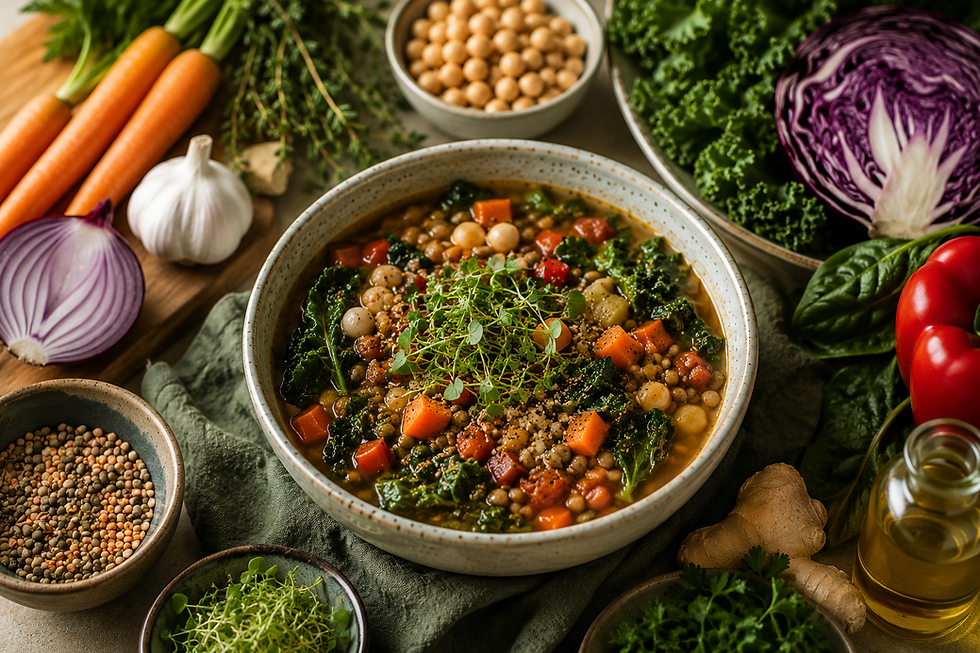
When I am making a soup or stew for immune support, my mental checklist is always centred around nutrient density and gut health:
At least five different vegetables or plant foods in the pot
A bean or lentil of some kind (chickpeas, cannellini beans, or red lentils)
Bone broth as the base for minerals and collagen
A quality protein source like chicken, fish, or slow-cooked meat
A complex carbohydrate such as potato, sweet potato, brown rice, or barley
The goal is really to create a meal that contains all of the macronutrients while packing in as many colourful plants as possible. Quite often, one soup or stew can contain close to 10 different plant foods in a single meal, which is fantastic for supporting the gut microbiome during winter.
GETTING AT LEAST 20-30 PLANTS A WEEK
WITHOUT LOSING MY MIND
I think the biggest thing is helping people realise that 20-30 plants per week sounds far more overwhelming than it actually is. Once you explain that plant foods include fruits, vegetables, herbs, spices, beans, lentils, chickpeas, nuts, seeds, oats, rice, and whole grains, people usually realise they are already eating more variety than they think.
I also encourage clients not to think about it as needing 30 completely different meals. You can often hit 20-30 plant foods across just a few days by slightly upgrading meals you already enjoy.
For example, if someone is making tacos, nourish bowls, pasta, soup, or a stir fry, we simply look at how to add one or two extra plant foods into that meal. Maybe it is adding black beans, lentils, corn, spinach, fresh herbs, or simply another colour of capsicum. Even using three different coloured capsicums in one meal counts as three different plants while still tasting familiar and easy.
Keep your normal meals, but add more colour, more variety, and more fibre little by little.
By the end of the week, those small additions really add up, and most people realise they can comfortably hit 30 different plant foods without needing complicated recipes or restrictive eating. It becomes more about variety and abundance rather than perfection.
FOOD FIRST, THEN SUPPLEMENTS
I definitely think supplements have an important place, and for some people they are absolutely necessary. If somebody is deficient in certain nutrients, has increased requirements, or is going through a season where intake or exposure is lower, then supplementation can be incredibly helpful and sometimes very important.
But I am still very much a "food first" practitioner because food does so much more than just provide isolated vitamins and minerals.
Plants, vitamins, minerals, fibre, antioxidants, and phytonutrients were always meant to be consumed together rather than in isolation, and they work synergistically to best support the body's needs. When we improve the quality and diversity of someone's diet, we are supporting gut health, fibre intake, blood sugar regulation, protein intake, energy levels, recovery, and long-term behaviour change all at the same time.
That is the sequencing piece that matters to me.
If someone relies only on supplements without addressing the foundation — poor sleep, high stress, low protein intake, low fibre intake, highly processed foods, minimal plant diversity — then supplements can end up acting more like a temporary band-aid rather than creating meaningful long-term health change.
Whereas when we build strong foundations first through lifestyle and nutrition, and then use supplements strategically where needed, the supplements tend to work much more effectively because the body is already being supported properly.
So I do not see it as "food versus supplements." I see it as:
Build the foundation through food and lifestyle.
Identify gaps, deficiencies, increased needs, or seasonal demands.
Use targeted supplementation to support and enhance those foundations.
That combination is where I tend to see the most sustainable results long term.
WHEN TO MOVE AND WHEN TO REST
This really is a case-by-case situation, because everybody responds to illness differently. The biggest thing I encourage is listening to your body and respecting recovery.
Generally, if someone still feels exhausted, achy, feverish, short of breath, or heavily congested, I am usually encouraging rest and very gentle movement only — things like stretching, getting outside for fresh air, or a light walk if it feels supportive.
Once energy starts returning, appetite improves, and the body begins to feel more normal again, that is usually when gentle movement can become really beneficial. A walk outside, light mobility work, or easy movement can help support circulation, mood, digestion, and getting the body moving again without adding extra stress.
The line is really when exercise starts feeling restorative rather than depleting.
We do not want to jump straight back into intense training too quickly, because pushing through illness when the body is still trying to recover can sometimes prolong symptoms or leave people feeling run down for longer.
WHAT ACTUALLY WORKS: THE REALISTIC APPROACH
I am absolutely supportive of prevention, and I do think there are many things we can do to reduce risk — things like supporting gut health, prioritising sleep, washing hands, staying on top of nutrition, and correcting common nutrient deficiencies such as low vitamin D.
But I also think it is important to be realistic, especially for parents. When you have children in daycare, school, sports, and everyday social environments, exposure to winter bugs is simply part of life.
So for me, the shift is less about chasing the idea of never getting sick, and more about asking: how do we support the body to be more resilient when sickness does happen?
Instead of creating fear around illness or expecting perfection, I want people to feel empowered by the things they can control — nourishing meals, gut health, hydration, vitamin D, zinc, sleep, recovery, stress management, and listening to the body early rather than pushing through exhaustion.
Because the reality is that life keeps moving during winter. Parents still have to parent, people still have to work, and families still have responsibilities even when they are run down.
My approach is really about helping people recover better, reduce the severity or duration where possible, and support their bodies in a sustainable and realistic way rather than chasing the impossible goal of avoiding every single bug.
Start with vitamin D. Add zinc when symptoms begin. Keep vitamin C in the mix if it feels supportive. Prioritise sleep, hydration, and gut-nourishing meals. Listen to your body when it asks for rest.
That is the foundation that actually holds through winter and beyond.



Comments